
SEARCH GROWTH
Build stronger visibility with a clearer search strategy.
OUR SEARCH GROWTH SOLUTIONS
Search services for the constraints that matter most.
Search Visibility Strategy
Local Search Growth
Content Authority
Technical SEO & Migrations
Not sure which search problem should be solved first?
Frequently Asked Questions
Search growth is the process of improving how your business appears across search by strengthening visibility, content, authority, technical performance, and conversion opportunities. The goal is not simply more traffic, but more relevant traffic that can lead to enquiries and growth.
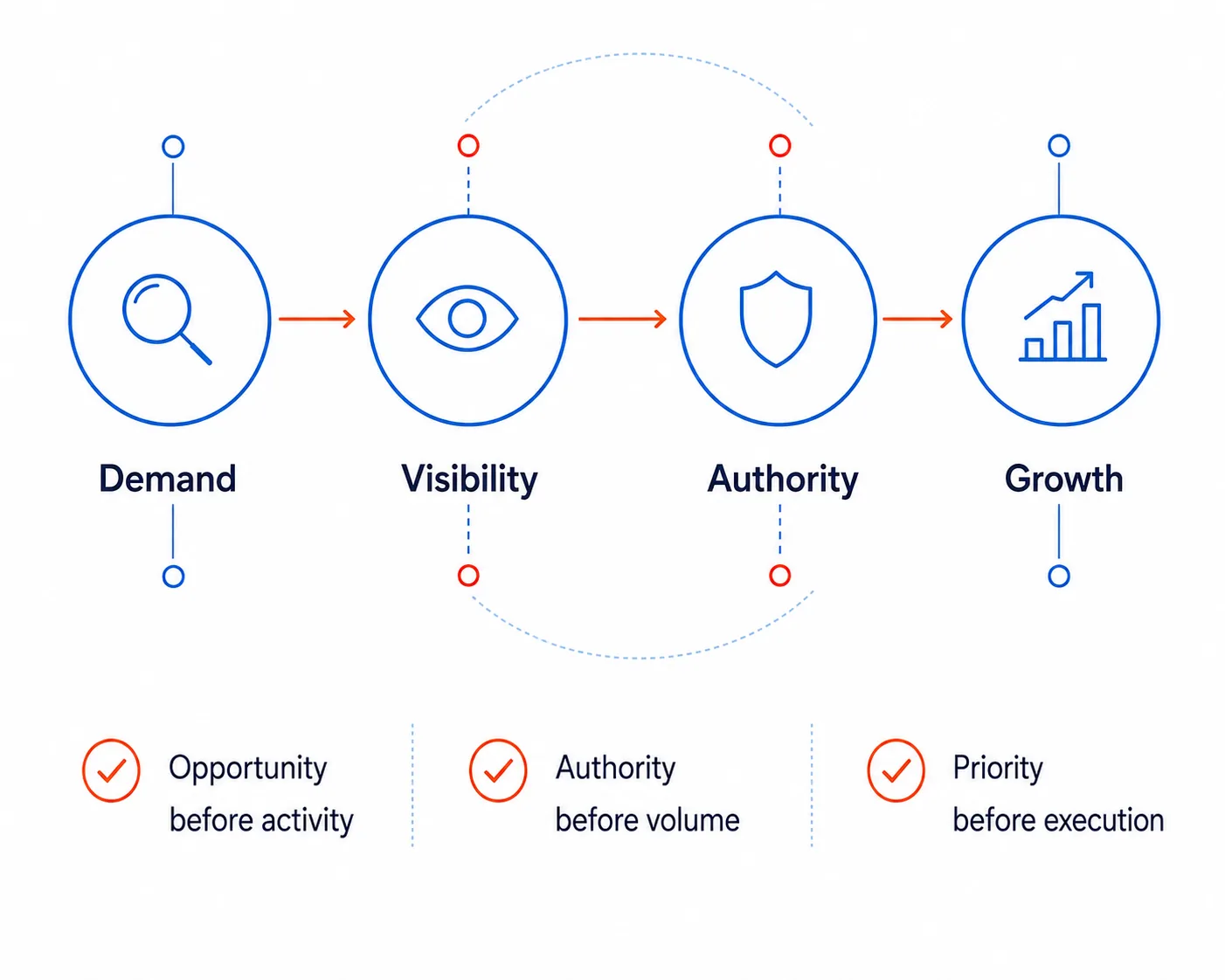
Traditional SEO often focuses heavily on rankings and keywords. Search growth takes a broader approach by connecting search demand, site structure, content, authority, local visibility, and conversions.
A search review can identify the biggest gaps across visibility, technical performance, content, authority, and site structure. From there, the work can be prioritised based on potential impact and business goals.
Yes. Local Search Growth focuses on improving local relevance, strengthening location signals, and helping businesses capture more searches from people in the areas they serve.
A Search Visibility Strategy identifies where search demand exists and maps out the content, pages, technical improvements, and authority signals needed to compete more effectively.
Content Authority focuses on building useful, relevant content around the topics your business needs to be known for. This can include service content, supporting articles, internal linking, topical coverage, and stronger expertise signals.
Yes. Technical SEO can address issues involving crawling, indexing, site structure, redirects, canonicalisation, performance, migrations, and other technical problems that may limit search visibility.
SEO timelines vary depending on competition, current website condition, authority, technical issues, and the amount of work required. Some improvements may appear relatively quickly, while broader organic growth usually develops over time.